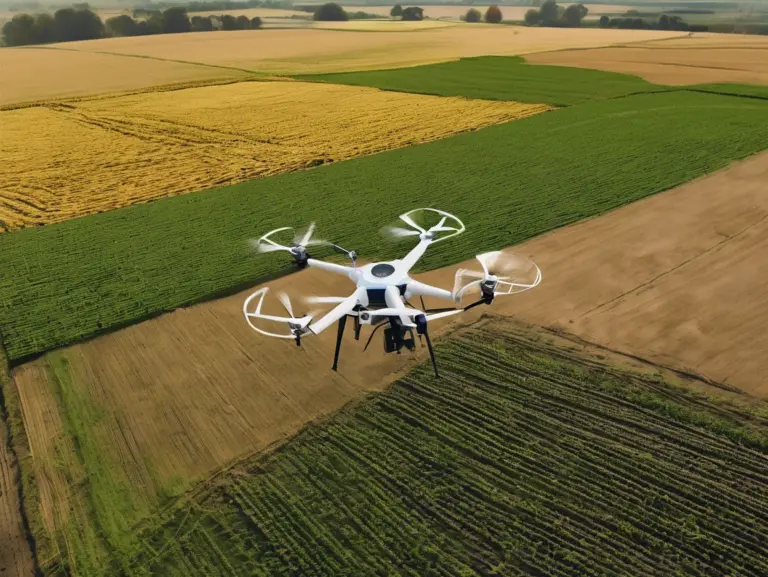

Construction drones are increasingly becoming valuable tools on building sites, offering a bird’s-eye view and the capability to automate various tasks. Their main features revolve around data acquisition, automation, and improved efficiency and safety. Here’s a breakdown of some key features:
1. High-Resolution Imaging and Video:
- Equipped with advanced cameras capable of capturing high-resolution still images and video footage. This allows for detailed site surveys, progress monitoring, and documentation.
- Often include gimbal stabilization to ensure smooth and stable footage even in windy conditions.
2. Surveying and Mapping Capabilities:
- Many construction drones are equipped with or can be integrated with RTK (Real-Time Kinematic) or PPK (Post-Processed Kinematic) GPS systems. These technologies enable highly accurate georeferencing of captured data.
- Using photogrammetry software, the captured images can be processed to create detailed 2D orthomosaics, 3D models, digital terrain models (DTMs), and point clouds of the construction site. This provides precise measurements for volume calculations, cut and fill analysis, and site planning.
- Some advanced drones utilize LiDAR (Light Detection and Ranging) sensors to generate even more accurate 3D models, especially in areas with dense vegetation or complex structures.
3. Progress Monitoring and Reporting:
- Drones can autonomously fly pre-programmed routes at regular intervals, capturing consistent imagery of the site.
- This allows for easy comparison of site conditions over time, enabling stakeholders to track progress against schedules and identify potential delays.
- Software platforms can analyze the captured data to generate automated progress reports, highlighting completed work, potential bottlenecks, and material stockpiles.
4. Site Inspection and Asset Management:
- Drones can safely and efficiently inspect tall structures, bridges, roofs, and other hard-to-reach areas, reducing the need for manual inspections and improving safety.
- They can identify potential issues like structural damage, material degradation, or safety hazards.
- Equipped with thermal cameras, drones can detect heat signatures, which can be useful for identifying insulation issues, overheating equipment, or water leaks.
- Drones can also be used for asset inventory and management, tracking the location and status of equipment and materials on site.
5. Automation and Autonomous Flight:
- Many construction drones offer autonomous flight capabilities, allowing them to follow pre-defined flight paths and execute tasks without constant manual control.
- Features like obstacle avoidance and return-to-home functions enhance safety and reliability.
- Some drones can be integrated with Building Information Modeling (BIM) software to overlay design plans onto live site imagery, providing valuable context and aiding in quality control.
6. Payload Capacity and Versatility:
- Construction drones come in various sizes and configurations, with varying payload capacities.
- This allows them to carry different types of sensors and equipment, such as high-resolution cameras, thermal imagers, LiDAR scanners, and even small delivery payloads.
- Some drones can be adapted for specific tasks like spraying coatings or installing lightweight materials.
7. Data Analysis and Integration:
- The value of drone data lies in its analysis and integration with existing construction management software.
- Specialized software platforms are used to process, analyze, and visualize the captured data, generating actionable insights.
- Integration with BIM, project management, and GIS systems allows for seamless data sharing and collaboration among project stakeholders.
8. Safety and Efficiency Improvements:
- Drones can access hazardous areas, reducing the risk to human workers during inspections and surveys.
- They can perform tasks much faster and more efficiently than traditional methods, saving time and costs.
- The detailed data captured by drones can lead to better decision-making, improved planning, and reduced errors, ultimately contributing to more successful projects.
In summary, the main features of construction drones empower project teams with enhanced visibility, accurate data, automation capabilities, and improved safety, leading to more efficient and effective construction processes.